
Term Insurance vs Life Insurance: Key Differences, Benefits, Costs & Tax Rules
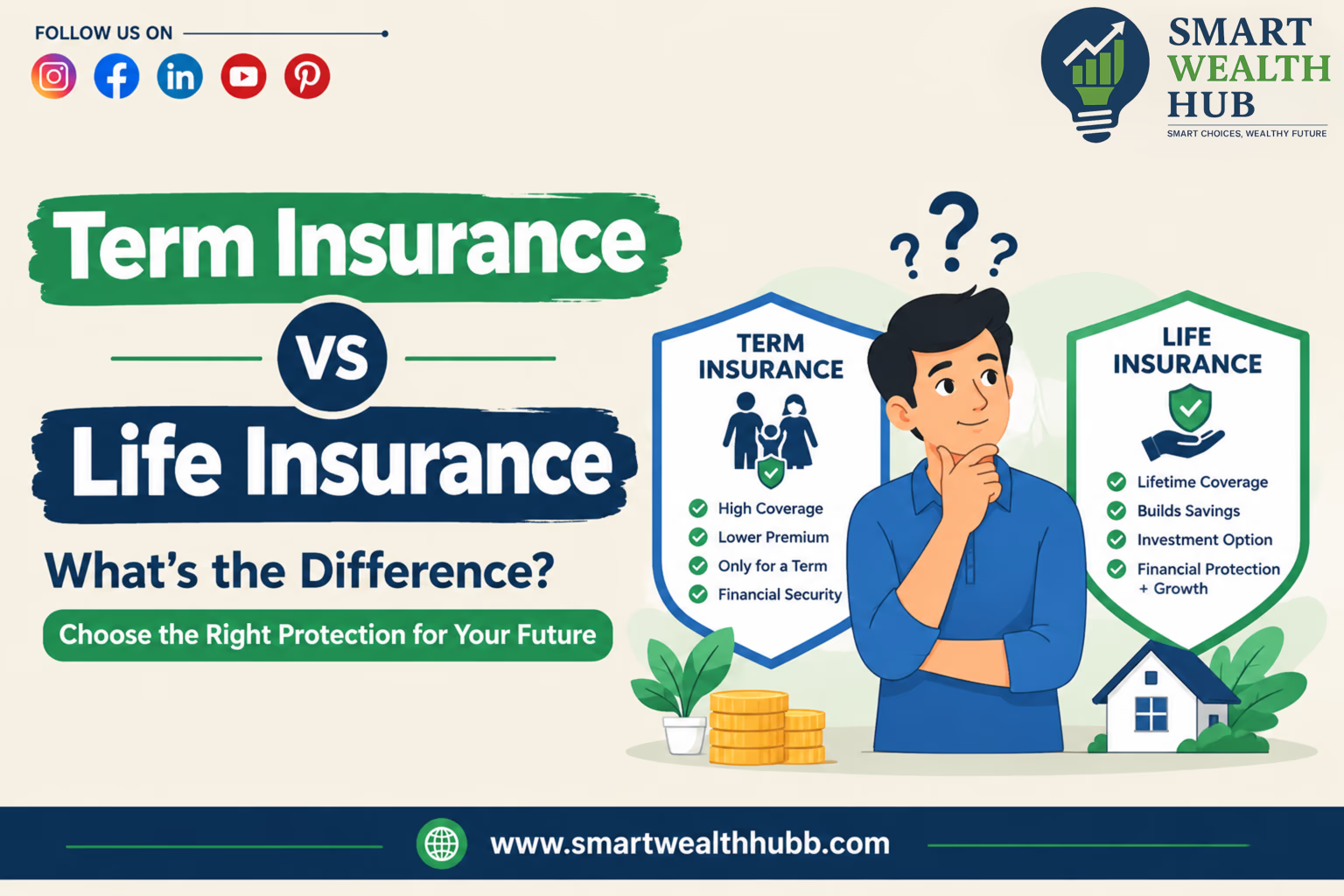
Term insurance is a type of life insurance that primarily provides financial protection for a specified period, usually at a relatively lower premium for a high sum assured.
Life insurance is a broader category that includes term insurance as well as savings-oriented and investment-linked products such as endowment plans, whole-life policies and ULIPs.
The key difference is that a pure term insurance plan generally provides a death benefit during the policy term but no maturity benefit if the insured survives, while some other life insurance products may provide maturity benefits, bonuses or investment-linked values depending on their structure.
For most people, the decision should begin with one question: How much financial protection would my family need if my income stopped unexpectedly?
Only after determining the required protection should premium, maturity benefits, tax treatment, investment features and other policy benefits be compared.
What Is Term Insurance?
Term insurance is a life insurance product designed primarily to provide financial protection against the death of the insured during a specified policy term.
For example, a person could purchase a ₹1 crore term insurance policy for 30 years. If the insured dies during the applicable policy period and the claim is payable under the policy terms, the nominee receives the applicable death benefit.
If the insured survives the entire term, a standard pure-term policy generally does not pay a maturity benefit.
This structure allows term insurance to focus primarily on protection rather than wealth accumulation.
Key Features of Term Insurance
- High life cover can generally be purchased for a comparatively lower premium.
- Coverage continues for the selected policy term, subject to policy conditions.
- The nominee receives the death benefit if an eligible death occurs during the policy period.
- A pure-term policy normally does not have a maturity payout.
- Optional riders may be available depending on the insurer and product.
- Premiums depend on factors such as age, health, sum assured, policy term, smoking status, occupation and underwriting.
Term insurance is therefore particularly relevant when the main objective is income replacement and family financial protection.
What Is Life Insurance?
Life insurance is a broad category of financial protection products.
It can include:
- Term insurance
- Whole-life insurance
- Endowment plans
- Money-back policies
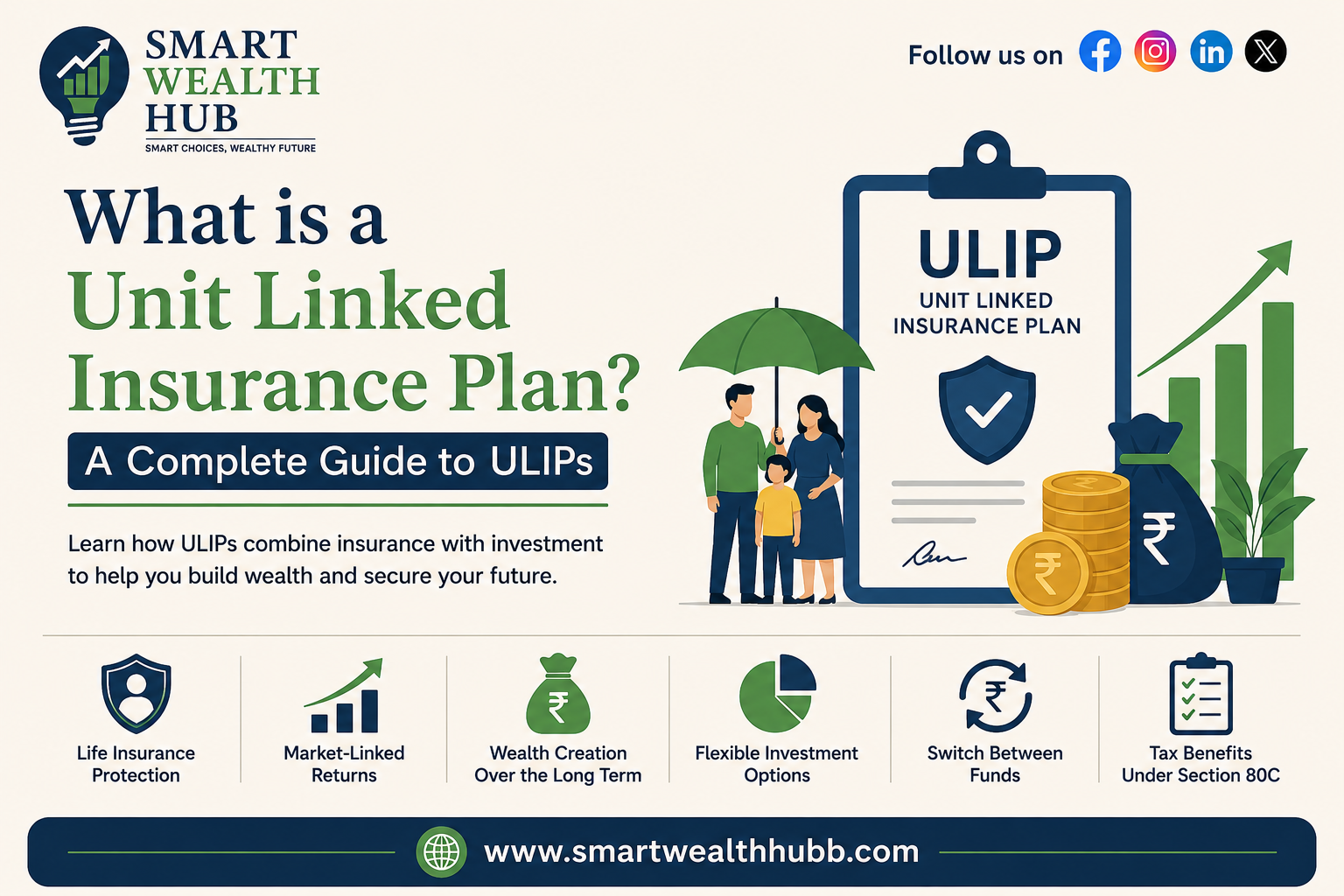
- Unit-linked insurance plans (ULIPs)
- Participating policies
- Non-participating policies
- Annuity and pension-related insurance products
Not every life insurance product has the same purpose.
Some are designed primarily for protection, while others combine life insurance with savings, investment or long-term contractual benefits.
This is why saying that "term insurance and life insurance are different" is technically incomplete.
Term insurance itself is a form of life insurance.
The more useful comparison is generally: Pure term insurance vs savings-oriented or investment-linked life insurance.
Term Insurance vs Life Insurance: Key Differences
| Feature | Term Insurance | Savings-Oriented Life Insurance |
|---|---|---|
| Primary purpose | Financial protection | Protection + savings/other benefits |
| Premium | Generally lower for high cover | Generally higher for comparable budgets |
| Life cover | Usually high relative to premium | May be lower relative to premium |
| Maturity benefit | Usually no maturity benefit in pure term plans | May provide maturity benefits |
| Investment component | Generally absent | May be present depending on product |
| Returns | Not designed primarily for returns | May provide bonuses, maturity value or fund value |
| Policy term | Fixed period | Depends on product |
| Liquidity | Depends on policy | Depends on policy |
| Risk | Primarily mortality protection | Varies according to product |
| Suitable for | Income protection and family security | Protection combined with specific savings/investment objectives |
Important: Actual benefits, guarantees, exclusions, charges, surrender values and maturity amounts depend on the specific policy.
Term Insurance vs Life Insurance Premium: Why Is There a Difference?
One of the biggest differences is the way premiums are structured.
Suppose two hypothetical policies are being considered by a 30-year-old:
Option A: Term Insurance
- Sum assured: ₹1 crore
- Policy term: 30 years
- Illustrative annual premium: ₹12,000
Option B: Savings-Oriented Life Insurance
- Annual premium: ₹1,00,000
- Policy term: 20 years
- Life cover: ₹20 lakh
- Maturity benefit: Based on policy terms
These are hypothetical figures and are not insurance quotes.
The comparison demonstrates the underlying principle:
Term insurance can provide substantially higher pure life cover for a lower premium because it is primarily designed for protection.
A savings-oriented policy allocates part of the premium toward benefits beyond pure mortality protection, depending on the product.
Therefore, comparing the two solely by annual premium can be misleading.
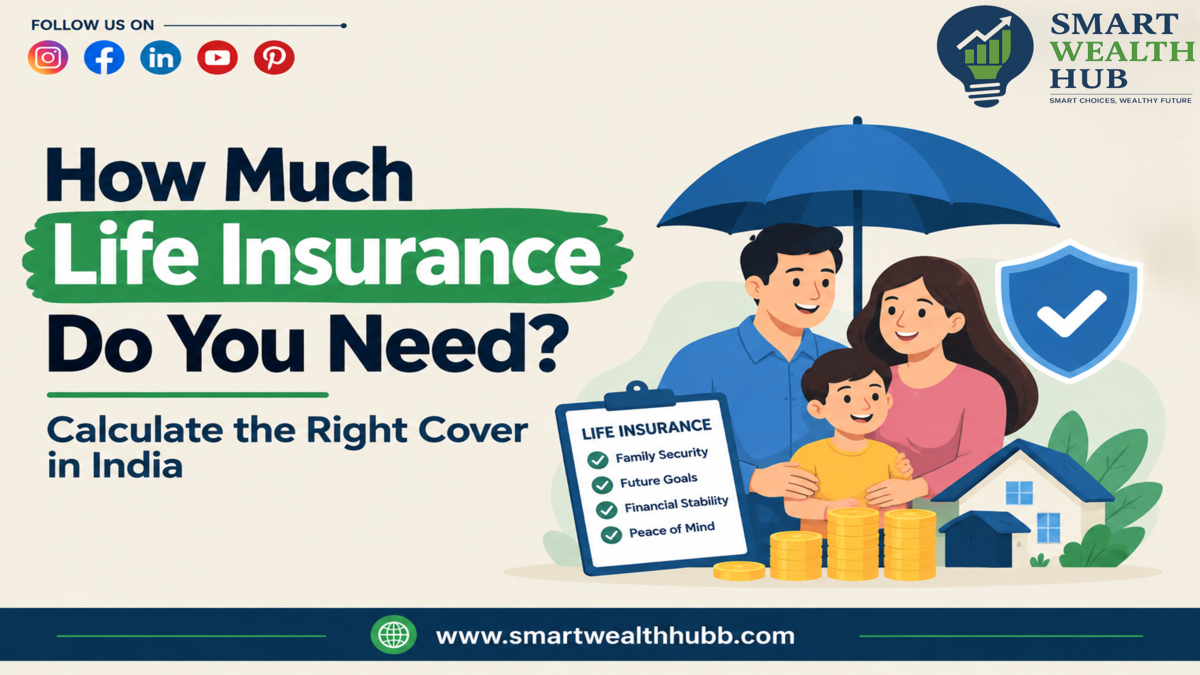
How Much Term Insurance Do You Need?
The right life insurance cover depends on your financial responsibilities.
A commonly used framework is: Required Life Cover = Liabilities + Future Goals + Income Replacement Requirement − Existing Assets
Consider this example:
- Home loan: ₹40 lakh
- Other liabilities: ₹5 lakh
- Children's education: ₹25 lakh
- Family income replacement requirement: ₹50 lakh
- Existing financial assets available for the family: ₹20 lakh
Calculation: ₹40 lakh + ₹5 lakh + ₹25 lakh + ₹50 lakh − ₹20 lakh
Required cover = ₹1 crore
This is a simplified calculation. A more detailed assessment should consider:
- Inflation
- Current household expenses
- Number of dependants
- Remaining working years
- Existing investments
- Existing insurance policies
- Outstanding loans
- Children's education
- Retirement needs of the surviving spouse
- Future financial goals
Calculate your life insurance requirement
Term Insurance Calculation: Why Starting Early Can Matter
Age is one of the factors considered in life insurance underwriting and pricing.
Consider a hypothetical example.
A 30-year-old purchases a ₹1 crore term plan with an illustrative annual premium of ₹12,000.
Over 30 years: ₹12,000 × 30 = ₹3,60,000
Now suppose another person purchases comparable coverage at age 40 for an illustrative annual premium of ₹25,000 for 20 years.
Total premiums: ₹25,000 × 20 = ₹5,00,000
Difference: ₹5,00,000 − ₹3,60,000 = ₹1,40,000
These numbers are purely illustrative. Actual premiums can vary significantly between individuals.
The broader lesson is that delaying insurance can have two potential consequences:
- Premiums may be higher because the applicant is older.
- Changes in health may affect underwriting, premiums or eligibility.
Therefore, life insurance is generally easier to evaluate when considered before a major financial dependency or health issue arises.
Term Insurance vs Life Insurance: Tax Benefits in India
Tax treatment can be relevant when comparing insurance products, but tax saving should not be the primary reason for purchasing life insurance.
Section 80C and Life Insurance Premiums
Eligible life insurance premiums can qualify for deduction under Section 80C, subject to the applicable conditions and limits.
The Income Tax Department currently lists life insurance premiums among eligible Section 80C payments and specifies a combined Section 80C limit of ₹1.5 lakh.
However, the deduction is relevant to taxpayers using the tax regime in which Section 80C deductions are available. Taxpayers should therefore consider their applicable tax regime before assuming that a premium will reduce taxable income.
Example
Suppose an eligible taxpayer pays: Annual life insurance premium = ₹50,000
If the entire amount qualifies and the taxpayer has sufficient available Section 80C limit, ₹50,000 could form part of the Section 80C deduction.
If the taxpayer's applicable marginal tax rate were hypothetically 20%: ₹50,000 × 20% = ₹10,000
The illustrative tax impact would be ₹10,000 before considering cess, surcharge and the taxpayer's overall tax position.
The actual benefit depends on the individual's circumstances.
Is Term Insurance Tax-Free?
Tax treatment of life insurance proceeds depends on the applicable provisions and policy characteristics.
Section 10(10D) provides exemption for qualifying life insurance policy proceeds subject to specified conditions.
For a typical qualifying term insurance policy, the death benefit is generally treated differently from taxable investment income because it is a life insurance death benefit.
However, taxpayers should not assume that every insurance maturity amount is automatically tax-free.
Rules can depend on:
- Policy type
- Policy issue date
- Premium amount
- Sum assured
- Premium-to-sum-assured ratio
- ULIP-specific provisions
- Other conditions under the Income Tax Act
Therefore, tax treatment should be checked for the specific policy before making a purchase decision.
Term Insurance vs Investment: Should You Combine Them?
A common financial planning question is: "Why should I buy term insurance when another life insurance policy gives me a maturity benefit?"
The answer depends on the purpose of each financial product.
Term insurance primarily transfers mortality risk.
Investments primarily aim to create wealth over time.
These are different financial objectives.
For example, suppose someone needs ₹1 crore of life protection but can spend ₹30,000 per year on insurance.
A pure term plan might potentially provide substantially higher protection than a savings-oriented policy available within the same budget.
The remaining money can then potentially be allocated toward investments based on the individual's goals and risk profile.
This approach is sometimes described as: "Buy adequate protection and invest separately."
However, this is not a universal rule. Some individuals may prefer insurance products with contractual savings features because of their financial objectives, risk preferences or need for disciplined long-term saving.
The important point is to compare the complete financial outcome, not just the maturity value.
What Is Return of Premium Term Insurance?
Some term insurance products offer a return-of-premium feature.
Under such a structure, eligible premiums may be returned at maturity if the insured survives the policy term, subject to the specific policy conditions.
For example:
Suppose a policyholder pays an illustrative ₹25,000 per year for 20 years.
Total premiums: ₹25,000 × 20 = ₹5,00,000
If the policy provides a qualifying return-of-premium benefit of the applicable premiums, the maturity amount could be based on the policy's stated terms.
However, the premium for such a product may be higher than a comparable pure-term plan.
Before choosing it, compare:
- Total premiums paid
- Life cover
- Maturity benefit
- Opportunity cost
- Inflation
- Tax treatment
- Policy conditions
- Surrender rules
- Alternative investment options
A maturity benefit by itself does not establish that one policy is financially superior.
Term Insurance vs Whole Life Insurance
Whole life insurance and term insurance have different policy structures.
Term Insurance
Term insurance generally provides protection for a specified period.
Whole Life Insurance
Whole-life products are designed to provide coverage for a much longer period, potentially extending to the insured's lifetime subject to product conditions.
The choice depends on the purpose.
For example:
Income replacement: Term insurance may be more directly aligned with the objective.
Legacy or estate planning: A whole-life product may be considered where its specific structure meets the individual's needs.
The decision should be based on the actual policy benefits, cost and long-term objective rather than the product name.
Who Should Consider Term Insurance?
Term insurance may be particularly relevant for people who have:
1. Dependants
If a spouse, children or parents depend on your income, your death could create a significant financial gap.
2. Outstanding Loans
A home loan, business loan or other liability can become a financial burden for surviving family members.
3. Long-Term Financial Goals
Life insurance can help protect funding for goals such as:
- Children's education
- Children's marriage
- Family housing
- Retirement security for the surviving spouse
4. Limited Insurance Budget
People seeking substantial life cover with a relatively limited insurance budget may find term insurance particularly relevant.
When Could Other Life Insurance Products Make Sense?
Other life insurance products may be considered when someone specifically wants:
- Contractual maturity benefits
- Guaranteed benefits, where applicable
- Participating bonuses, where applicable
- Long-term savings discipline
- Investment-linked exposure
- Legacy or estate-planning features
The product should be assessed using the official benefit illustration and policy documentation.
Never treat a projected non-guaranteed benefit as equivalent to a guaranteed return.
How to Choose Between Term Insurance and Life Insurance
Use the following decision framework.
Step 1: Determine Your Objective
Ask whether the primary goal is:
Protection, savings, investment, legacy planning, or a combination.
Step 2: Calculate Required Life Cover
Estimate liabilities, family expenses, future goals and existing assets.
Step 3: Set an Affordable Premium
Choose a premium that can realistically be maintained for the required duration.
Step 4: Compare Policy Terms
Look at:
- Sum assured
- Policy term
- Premium-payment term
- Death benefit
- Maturity benefit
- Exclusions
- Riders
- Surrender provisions
- Guaranteed and non-guaranteed benefits
Step 5: Review Tax Implications
Consider the applicable provisions of Sections 80C and 10(10D), along with the tax regime applicable to you.
Step 6: Read the Policy Document
Do not make a decision based solely on a sales presentation or online premium comparison.
Regulatory Considerations for Life Insurance in India
When evaluating a policy, consumers should therefore review the insurer's official policy document, benefit illustration and applicable terms.
Particular attention should be paid to whether benefits are:
- Guaranteed
- Non-guaranteed
- Conditional
- Linked to investment performance
- Subject to policy continuation
This distinction is especially important for savings-oriented and participating products.
Common Mistakes to Avoid
Mistake 1: Buying Insurance Only for Tax Saving
Tax benefits can change and may not be available under every tax regime.
Insurance should primarily address a genuine financial risk.
Mistake 2: Choosing Cover Based Only on Income
Income multiples can be useful as a starting point, but they do not account for all liabilities and future goals.
Mistake 3: Ignoring Inflation
₹1 crore today will not have the same purchasing power decades from now.
Mistake 4: Buying Too Little Cover
A policy may appear affordable but fail to provide sufficient protection.
Mistake 5: Focusing Only on Maturity Value
A higher maturity amount does not necessarily mean better protection.
Mistake 6: Not Updating Nominee Details
Financial circumstances can change. Nomination details should be reviewed when appropriate.
Mistake 7: Providing Incomplete Information
Applicants should provide accurate information regarding health, smoking, occupation and other relevant proposal details.
Term Insurance vs Life Insurance: Which Is Better?
There is no single answer that applies to everyone.
Term insurance may be better suited to someone whose primary requirement is high life cover and family income protection.
Savings-oriented life insurance may be relevant to someone who specifically wants insurance combined with contractual savings or other policy features.
The correct choice depends on:
- Financial responsibilities
- Dependants
- Income
- Existing assets
- Loans
- Financial goals
- Insurance budget
- Investment preferences
- Risk tolerance
- Desired policy duration
The most important principle is to match the product to the financial objective.
Final Verdict: Term Insurance vs Life Insurance
Term insurance and other life insurance products should not be viewed as competing products in every situation.
They solve different financial problems.
If your primary objective is protecting your family's financial future against the loss of your income, term insurance can provide a straightforward way to obtain substantial life cover.
If you want insurance combined with savings, maturity benefits, investment exposure or legacy-planning features, other life insurance products may warrant consideration.
Before purchasing any policy:
Calculate your required cover → compare policy terms → understand exclusions → evaluate premiums → check tax treatment → read the policy documents.
The goal should not simply be to buy the cheapest policy or the policy promising the largest maturity amount.
The goal is to purchase appropriate financial protection for the people and obligations that depend on you.
Disclaimer: This article is for educational purposes only and does not constitute personalized financial, insurance, investment or tax advice. Insurance benefits, premiums, exclusions and tax treatment depend on the specific policy and applicable laws and regulations. Readers should verify current provisions and policy terms before making financial decisions.
Frequently Asked Questions
Is term insurance the same as life insurance?
No. Term insurance is one type of life insurance designed primarily to provide death protection for a specified period. Life insurance is a broader category that includes term, whole-life, endowment, ULIP and other products.
Which is better: term insurance or life insurance?
Neither is universally better. Term insurance is generally focused on high financial protection, while some other life insurance products combine protection with savings or investment features. The appropriate choice depends on your financial objective.
Why is term insurance cheaper than other life insurance policies?
Pure term insurance generally focuses on death protection during a defined period and does not normally include a maturity or savings component. This can allow substantial life cover for a comparatively lower premium.
How much term insurance should I buy?
There is no universal amount. Consider outstanding liabilities, future financial goals, family expenses, income replacement requirements, inflation and existing assets or insurance before determining the required cover.
Is a term insurance death benefit taxable?
Qualifying life insurance death benefits are generally exempt under Section 10(10D), subject to the applicable provisions. The exact tax treatment should be checked against the policy type and circumstances.
These articles are for awareness. For advice suited to your goals, talk to our team.
Book a free consultationDisclaimer: Views in this article are for educational purposes and do not constitute personalised financial, tax, or investment advice. Markets involve risk — read all related documents carefully.


Comments0
No comments yet. Be the first to share a thought.